|
HAIR-DRESSING OF ROMAN LADIES AS ILLUSTRATED ON COINS. |
|
|
|
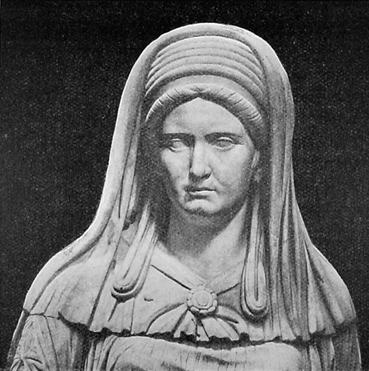
41 NUMISMATIC CHRONICLE side of the neck. The illustration given below is of one of these statues in the " Terme " Museum in Rome. This fillet may be the " infula," or sacred “vitta,” worn as a sign of religious consecration, a badge of honour and office. The monumental coiffure may represent the “tutulus,” the “sex crines” mentioned above as the bridal mode (cf. Helbig, Fuhrer, ii. 217, etc,). Out of
doors, married ladies generally covered the hair with a veil. When sacrificing, the vestal wore the “suffibulum,” or veil, fastened on the breast by a "fibula," or brooch, as shown in my illustration. This portrait-gallery of vestals in Rome was evidently once of much greater range than at present, as inscribed pedestals were found covering the first four centuries.
|
|
|